 How-to
7 Steps to Sell Luxury Property Discreetly and Protect Privacy
Last Updated: November 5, 2026
Quick Summary
To sell luxury property discreetly, build a written confidentiality plan before any marketing, then choose an agent who runs a controlled private listing and screen every buyer for motivation, financing, proof of funds and willingness to sign a confidentiality agreement. Share details only with a curated buyer network, control physical and digital access, and measure the private funnel rather than public exposure.
- List everyone who will know about the sale and give each person a one-line script before photos are taken.
- An off-market sale trades reach for control, while a public listing trades control for reach.
- Require proof of funds and a signed confidentiality agreement before sharing the address or interior photos.
- Strip photo metadata and use access-controlled sharing that lets you revoke access and see who opened files.
- Set 30-, 60- and 90-day review checkpoints to decide whether to continue, adjust or widen exposure.
Table of Contents
- Why Discretion Decides the Outcome of a Luxury Sale
- Step 1: Build Your Confidentiality Plan Before Anything Goes Public
- Step 2: Choose an Agent Who Runs a Private Real Estate Listing
- Step 3: Weigh an Off-Market Sale Versus Public Listing
- Step 4: Run an Off-Market Luxury Home Sale Through a Curated Buyer Network
- Step 5: Screen Buyers for a Luxury Property Before Details Leave the Room
- Step 6: Control Access, Digital Exposure, and Private Viewings
- Step 7: Measure Whether a Discreet Campaign Is Working
- Frequently Asked Questions
Why Discretion Decides the Outcome of a Luxury Sale
Learning how to sell luxury property discreetly starts with one hard truth: information is the most valuable asset in a high-end transaction, and it is the easiest thing to lose. A single leaked address, an early photo, or a loose comment from a contractor can hand your buyer use and your neighbors a story.
This guide walks you through the full process in seven steps, from building a confidentiality plan to screening buyers and running a private listing.
What a Privacy Leak Actually Costs a Seller
A leak rarely costs you a single sale. It costs you the terms of that sale.
- Price erosion. Once the public knows a property is available, buyers assume urgency. They bid low and wait.
- Unwanted attention. Curious neighbors, press, and tourists change the experience of living in the home.
- Negotiating power. A buyer who knows your timeline or your motivation has no reason to move fast.
The Federal Trade Commission's consumer privacy guidance makes a useful distinction here: personal information shared for one purpose should not quietly become public. Apply that same standard to your sale.
Step 1: Build Your Confidentiality Plan Before Anything Goes Public
Confidentiality is a plan, not a promise. Write it down before you photograph a single room.
Start with a short written plan that covers four things:
- Who knows. List every person who will learn the property is for sale: family, staff, attorneys, accountants, contractors.
- What they may say. Give each person a one-line script. "No comment" is a complete sentence.
- What never goes digital. Address, owner name, and interior photos stay off shared drives and personal phones.
- Who approves each release. One decision-maker. No exceptions.
If you want to see how a confidential seller process is structured before you commit to a plan, review the seller services we offer.
A Sample Confidentiality Workflow
Here is the sequence we use. Adapt it to your situation.
- Week 1: Sign a representation agreement with a confidentiality clause.
- Week 1: Brief household staff and contractors on the script.
- Week 2: Complete a valuation before any marketing decision.
That log matters. If details surface later, you will know exactly where they came from.
Step 2: Choose an Agent Who Runs a Private Real Estate Listing
The agent you hire plays a large role in whether your private real estate listing stays private. Choose for process, not for charm.
Ask every candidate the same four questions:
- How do you share property details? A good answer describes a controlled list, not a mass email.
- Who on your team sees the file? You want a named, small group.
- How do you handle an unqualified inquiry? The answer should include a polite decline, not a brochure.
A common mistake is hiring the agent with the biggest public profile. For a deeper look at how to vet candidates, read our guide on how to choose discreet luxury real estate representation. When you are ready to talk through your situation, you can contact the team directly.
Step 3: Weigh an Off-Market Sale Versus Public Listing
An off-market sale trades reach for control. A public listing trades control for reach. Neither is automatically better.
Here is the framework we use with sellers.
| Factor | Off-Market Sale | Public Listing |
|---|---|---|
| Buyer pool | Curated and pre-qualified | Broad and open |
| Price discovery | Limited, negotiated privately | Tested by the open market |
| Privacy | High, details shared selectively | Low, details become public |
| Time to close | Often faster with ready buyers | Depends on market demand |
| Negotiating use | Stronger when motivation stays hidden | Weaker once terms leak |
| Best for | Sellers who value privacy and speed | Sellers who need maximum exposure |
Ask yourself three questions. Do you need the highest possible price, or the right price with the right buyer? Can your timeline absorb a longer search? Would public exposure create a real problem for you or your family?
Get a valuation before you decide. You cannot judge whether an off-market sale meets your expectations without knowing what the property is worth. A home valuation gives you that baseline.
Step 4: Run an Off-Market Luxury Home Sale Through a Curated Buyer Network
An off-market luxury home sale works only if the buyer network is real. Most are not.
A genuine curated buyer network has three traits:
- Named relationships. Your agent knows the buyers and the brokers personally.
- Recent activity. Those buyers are actively looking now, not on a vague watch list.
- Discretion on their side too. They expect confidentiality and respect it.
Agent-to-agent outreach can do much of the work. A short list of trusted brokers can be contacted, the property described in general terms, and full details shared only after a buyer clears screening.
What most guides miss is the discipline of the short list. Twenty well-chosen contacts beat two thousand email blasts, every time.
Step 5: Screen Buyers for a Luxury Property Before Details Leave the Room
Screening buyers for a luxury property is the step sellers most often skip. It is also the step that protects you most.
Screen in this order:
- Motivation and timeline. Why now, and when do they need to move?
- Financing status. Cash, pre-approved, or still exploring?
- Proof of funds. A letter from a bank or financial advisor, reviewed in confidence.
- Representation. Who is their agent, and have they signed an agreement?
- Discretion. Will they agree to keep the property confidential?
Anyone who resists step three or step five is not your buyer. That is not snobbery. It is risk management.
Proof of Funds and Confidentiality Agreements
A confidentiality agreement is a signed contract that limits what a prospective buyer may disclose about the property and the seller.
Proof of funds is documentation showing a buyer can complete the purchase. A bank letter or statement is enough at this stage. Never collect full account statements.
Watch out: a confidentiality agreement protects you contractually, not absolutely. It cannot stop gossip, and it does not override a buyer's legal obligations or a lawful disclosure requirement.
Step 6: Control Access, Digital Exposure, and Private Viewings
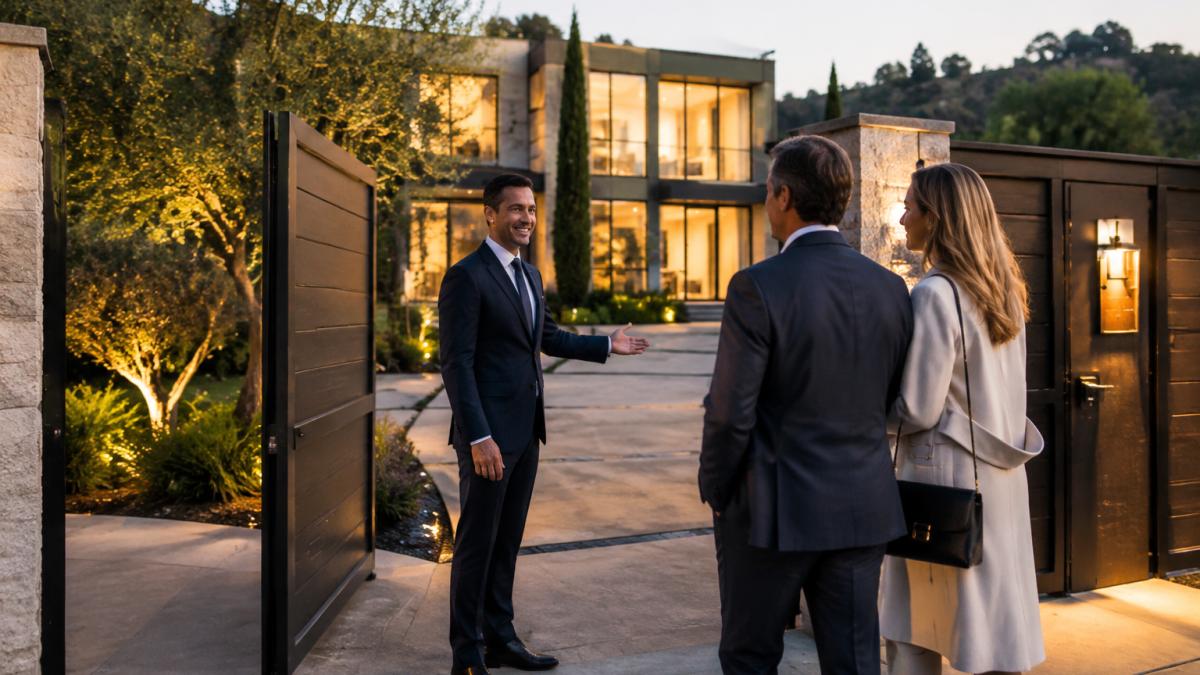
Controlled access means visits are scheduled and approved in advance. But physical access is only half the job. In a private sale, most leaks happen through files, photos, and devices, not front doors.
Physical Access Rules That Hold Up
- One showing at a time. Overlapping visitors create gossip and confusion, and they make it impossible to know who saw what.
- Vet before you schedule. Confirm identity, representation, and proof of funds before a time is offered.
- Stage the presentation. Professional photography and floor plans stay private until a buyer is approved. Show a printed summary sheet with no address, no owner name, and no exterior shots that identify the property.
Digital Exposure: The Part Most Sellers Miss
A photo taken on a phone can carry GPS coordinates in its metadata. A PDF floor plan can carry the author's name.
- Strip metadata before sharing. Most photo editors and file utilities can remove EXIF data; do it before any image leaves your device. Turn off location services for the camera app during the campaign.
- Use access-controlled sharing. Send documents through a platform that lets you revoke access, set an expiration date, and see who opened the file. Avoid personal email attachments and consumer cloud links with "anyone with the link" permissions.
- Watermark and serialize. Give each prospective buyer a slightly different version of the summary sheet or floor plan, initials in a corner, a unique file name. If a document surfaces later, you know the source.
Watch out: a confidentiality agreement does not cover a buyer's own devices or a contractor's phone. The agreement is one layer; file hygiene and access controls are the others.
For a fuller set of tactics on managing visits without exposure, read how to manage luxury property showings.
Step 7: Measure Whether a Discreet Campaign Is Working
A quiet campaign still produces signals. Judging it by public activity, page views, listing saves, social comments, can be misleading when the goal is limited exposure. Measure the private funnel instead, and set review points in advance so you are not making decisions on emotion.
The Private Funnel
Track these weekly, in writing:
- Qualified buyer conversations. Count only buyers who cleared screening. A conversation with an unqualified inquiry is not progress.
- Showings completed versus planned. If you planned four private showings in a month and completed one, that is a reach or pricing signal, not a scheduling problem.
- Second showings and repeat interest. A buyer who asks to return is the strongest private-market signal you will get.
Turning Signals Into Decisions
Use a simple decision framework at each checkpoint:
- Strong qualified interest, weak offers. The buyer pool is working; the price or terms are not. Adjust positioning before you widen exposure.
- Weak qualified interest, strong feedback on the property. The network is too narrow. Ask your agent to expand the short list to adjacent broker relationships before going public.
- No qualified interest at all. Revisit the screening criteria and the summary materials. If buyers cannot evaluate the property without an address, the private materials are too thin.
What Not to Measure
Website traffic, listing views, or social engagement may not be the most useful success metrics for a discreet campaign, since those numbers reflect public exposure.
Watch out: a long quiet stretch with no qualified interest is not proof that discretion failed, it may be proof that the price is wrong. Test the pricing hypothesis before you abandon the private strategy.
Frequently Asked Questions
How do I sell a luxury home without publicly listing it?
You sell it through an off-market or private listing: your agent presents the property only to a curated buyer and broker network instead of the MLS and public portals. The process still requires a signed listing agreement, a pricing strategy backed by a property valuation, and documented buyer screening. Expect a smaller pool of qualified buyers but far less online exposure, no public photography circulating, and viewings scheduled on your terms. Ask your agent to confirm in writing which channels will and will not carry the property before you sign.
Does selling a luxury home off-market affect its sale price?
It can, in either direction. A private sale limits marketing reach, so you may see fewer competing offers and less upward pressure on price. On the other hand, a controlled process avoids the stale-listing problem that drags down high-end homes after months of public time on market, and it protects your negotiating position because buyers cannot see your history. The trade-off depends on current buyer demand for your property type. Review recent comparable sales with your agent and set a walk-away number before deciding between off-market and public exposure.
How do agents screen buyers for a private property sale?
Screening buyers for a luxury property typically happens in layers. First comes a conversation to confirm motivation, timeline, and decision-makers. Next is proof of funds or a lender letter showing financially prepared buyers. Then a confidentiality agreement or non-disclosure agreement before any property details, floor plans, or seller identity are shared. Some agents also verify identity and ask about representation. Only after those steps does a private viewing get scheduled. Ask your agent what documentation they collect and how they store it, since buyer information is itself sensitive.
How long does it take to sell a luxury home discreetly?
There is no fixed timeline, and any agent who promises one is guessing. A discreet sale can close quickly when your agent's curated buyer network already contains a match, or it can run longer than a public listing because fewer buyers see the property. What you can control is the process: pre-screen buyers before showings, keep feedback loops short, and review campaign metrics monthly. If qualified buyer feedback stalls after a set period, that is the signal to adjust pricing, widen selective exposure, or move to a public listing.
Selling quietly takes more work than listing publicly, not less. If you want a partner who has run these transactions for high-profile sellers across the Greater Los Angeles market for over 25 years, Michael Eisenberg brings the local knowledge, the curated buyer relationships, and the hands-on attention these deals demand. As KW Beverly Hills' Number 1 Top Gun, we build each sale around your privacy first. Get started with Michael Eisenberg and sell on your terms, without the exposure.