 how-to
How Do You Manage Luxury Property Showings?
Last Updated: October 30, 2026
Quick Summary
Manage luxury property showings as scheduled, vetted, staffed events rather than open houses. Build a written checklist covering presentation, staging, privacy and access, qualify every buyer on financing and proof of funds, and confirm each appointment in writing. Run each visit like a concierge experience with a privacy sweep, briefed staff, and same-day feedback.
- Build a written luxury home showing checklist covering presentation, staging, privacy, and access before scheduling.
- Qualify buyers on lender letter or proof of funds, timeline, and fit before the first private showing.
- Group appointments into blocks with buffer time and confirm each by text or email the day before.
- Confirm buyer identity and agent representation in writing at least 24 hours before arrival.
- Ask for showing feedback the same day using a short, consistent set of questions.
Table of Contents
- Why Luxury Property Showings Follow Different Rules
- Step 1: Build a Luxury Home Showing Checklist Before You Schedule
- Step 2: Qualify Buyers Before the First Private Home Showings
- Step 3: Coordinate a Real Estate Showing Schedule That Protects the Seller
- Step 4: Run the Showing Like a Concierge, Not an Open House
- Step 5: Collect Real Estate Showing Feedback and Measure Performance
- Step 6: Follow Up With Buyers and Report Back to the Seller
- Working With an Agent Who Runs Discreet Luxury Showings
- Frequently Asked Questions
Why Luxury Property Showings Follow Different Rules
Luxury property showings are a controlled introduction, not an open house. It protects the seller's privacy, matches the property to a qualified buyer, and turns interest into an offer. Every showing is best handled as a scheduled, vetted, staffed event because a single careless visitor can cost a seller use or privacy.
Standard showings reward volume. Luxury showings reward precision. High-profile sellers often have privacy concerns that make a casual walkthrough unacceptable. Buyers in this bracket expect flexibility, discretion, and a home that looks untouched. That changes almost everything about how you plan.
For sellers juggling a demanding calendar, selling a luxury home on a busy schedule is a useful companion read. It covers how to fit showings around work and travel without losing momentum.
Step 1: Build a Luxury Home Showing Checklist Before You Schedule
Start with a written luxury home showing checklist, then schedule. The checklist covers presentation, staging, privacy, and access, so nothing is improvised on the day a buyer arrives.
Presentation, Staging, and Privacy Prep
Walk the home room by room and confirm:
- Deep cleaning, including windows, fixtures, and outdoor furniture
- Decluttering, with personal photos and valuables removed
- Staging in defined zones: conversation areas, reading corners, dining flow
- Lighting adjusted for warmth, with lamps on and blinds set
- Architectural details and amenities highlighted, not hidden
- Key management and access instructions confirmed with the seller
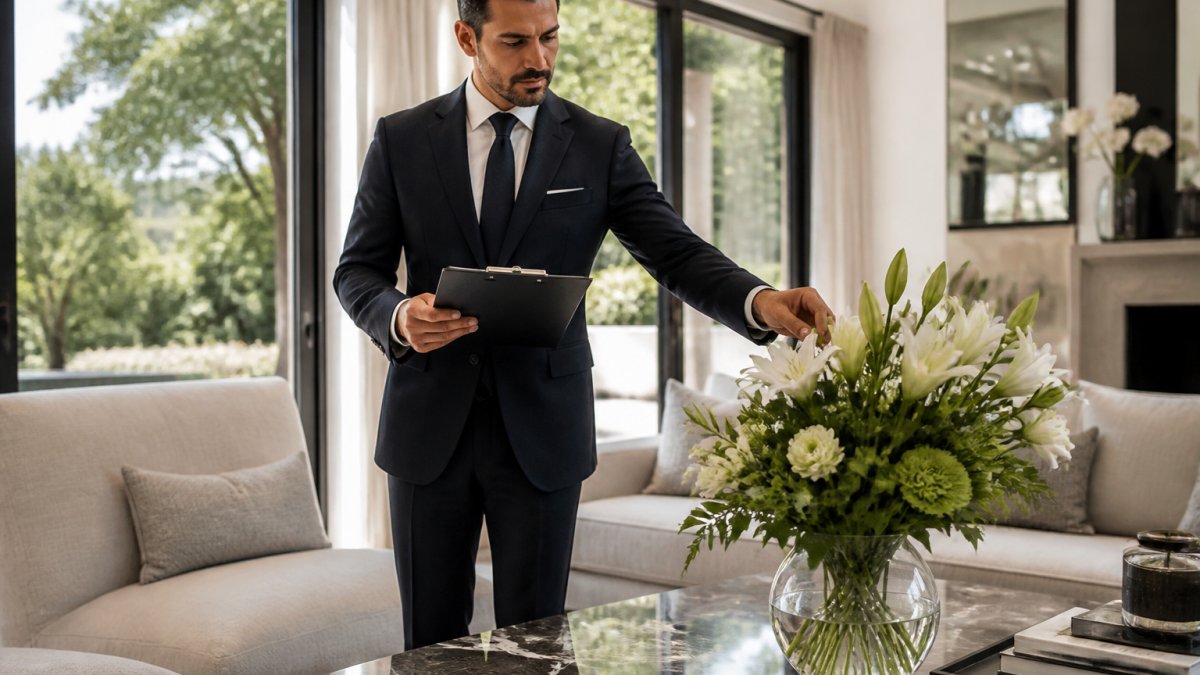
Watch out: skipping the privacy sweep is the mistake that ends relationships. A single visible document or family photo can become a gossip item.
Step 2: Qualify Buyers Before the First Private Home Showings
Qualify every buyer before the first private home showing. Ask about financing, timeline, and proof of funds, then confirm the appointment in writing. This protects the seller and keeps the schedule meaningful.
A qualified buyer has three things ready:
- A lender letter or proof of funds
- A clear timeline for moving
- A reason the home fits their target market needs
Buyers who want to see the process from their side can review our buyer services before requesting a private tour.
Step 3: Coordinate a Real Estate Showing Schedule That Protects the Seller
Build the real estate showing schedule around the seller, not the buyer. Group appointments into blocks, keep buffer time between visits, and confirm each one by text or email the day before.
Access, Keys, and Showing-Day Contingencies
- Use a tracked key system or smart lock with a unique code per visit
- Send access instructions to the buyer's agent in writing
- Keep a backup plan for lock failures, late arrivals, and weather
- Have the seller's preferred contact and a security contact on hand
The National Association of Realtors publishes guidance on property access and safety that supports a documented key and access process. Text notifications and online scheduling tools keep appointment coordination tight.
Step 4: Run the Showing Like a Concierge, Not an Open House
Treat the visit as a concierge experience, not a walkthrough. In luxury, the showing is a controlled production: arrival is choreographed, staff are briefed, valuables are secured, and the buyer never wanders unaccompanied.
Pre-Arrival Privacy and Security Protocol
- Confirm the buyer's identity and agent representation in writing at least 24 hours before arrival; require a government-issued ID match at the door.
- Remove or lock down valuables, prescription medications, financial documents, and family photos.
White-Glove Arrival and Orientation
- Walk the route in a deliberate order: entry and first impression, main living and entertaining spaces, kitchen and primary suite, then distinctive features (views, art, collections, architecture, amenities). Pause at each for questions.
Coordinating With Household Staff and Systems
-
Create a showing-day run sheet: arrival time, staff assignments, room-by-room checkpoints, and a post-showing reset checklist.
-
For homes with art or collections, confirm whether the seller's insurer or art advisor requires a representative present or a condition report before and after the visit.
Managing the Tour Itself
- Use quiet space for questions, with the agent nearby but not hovering.
- Close with a clear next step: a second visit, a private virtual tour for remote decision-makers, or a written follow-up with the orientation sheet and any requested documents.
Step 5: Collect Real Estate Showing Feedback and Measure Performance
Ask for real estate showing feedback the same day, while the impression is fresh. Use a short, consistent set of questions so responses are comparable across buyers.
Design the Feedback Instrument
Track These Numbers After Each Showing
| Metric | What It Tells You | Action If Weak |
|---|---|---|
| Showing attendance | Whether marketing reaches real buyers | Adjust outreach and qualification |
| Feedback themes | What buyers notice first | Fix presentation gaps |
| Follow-up rate | How many buyers re-engage | Tighten qualification and follow-up timing |
| Second-visit rate | Depth of interest | Review pricing and staging |
| Offer conversion | Whether showings turn into offers | Revisit price, presentation, and exposure |
| Time to offer | Pace of the market response | Review schedule and marketing mix |
Visitor feedback on lighting, flow, and features is more useful than a simple yes or no. A Harvard Business Review analysis of customer feedback shows that structured, timely questions produce better decisions than open-ended impressions.
Step 6: Follow Up With Buyers and Report Back to the Seller
For sellers focused on converting interest into a signed contract, our guide on how to sell a luxury home quickly walks through the steps that shorten time to offer.
Buyer interest fades fast. The follow-up is where appointment conversion is won or lost.
Working With an Agent Who Runs Discreet Luxury Showings
With more than 25 years in the Greater Los Angeles market and recognition as KW Beverly Hills' Number 1 Top Gun, Michael Eisenberg brings more than 25 years of experience in the Greater Los Angeles real estate market, with a track record representing high-profile entertainment luminaries and titans. Sellers can review the full seller services to see how showings fit into a listing plan, and buyers and sellers alike can contact us to discuss a discreet showing schedule.
The Federal Trade Commission advises consumers to understand representation and disclosure terms before signing, which is why we put the showing process in writing from day one.
Frequently Asked Questions
How should you prepare a luxury home for a showing?
Start with a luxury home showing checklist: declutter and deep clean every room, open blinds and set lighting to show architectural details, stage defined conversation areas, and secure valuables and personal documents. Confirm with the seller which rooms stay off-limits and which amenities, like a spacious kitchen or pool, should be highlighted. Walk the property the morning of the showing so nothing is out of place before the first appointment.
How do you schedule private showings for a luxury property?
Build a real estate showing schedule around the seller's preferences and the buyer's availability, not the other way around. Screen each request first: confirm proof of funds or a lender letter, ask about timeline, and check that the buyer is working with an agent. Space appointments so they never overlap, send written access instructions in advance, and keep a backup window open for showing-day contingencies like traffic or a delayed flight.
How can sellers protect privacy and security during showings?
Require pre-qualification for every visitor, log names and arrival times, and remove or lock away anything that reveals identity, schedules, or valuables. Use a private home showings approach with one buyer group at a time rather than an open house, and confirm the listing agent or a trusted representative is on site for the entire visit. After each appointment, walk the property and reset alarms before the next group arrives.
How do you follow up with buyers after a property showing?
Send a short thank-you within a few hours and ask two or three specific questions about what they liked and what gave them pause. That real estate showing feedback tells you whether to adjust staging, price, or marketing. Log every response, share a summary with the seller weekly, and follow up again within 48 hours if the buyer showed genuine interest. Consistent follow-up is what turns showing attendance into offers.
Managing luxury property showings means controlling who sees the home, when they see it, and what they remember afterward. If you want a showing process built around privacy and qualified buyers, get started with Michael Eisenberg and put a documented, concierge-level plan behind every appointment.