 how-to
7 Privacy Steps for Selling Luxury Homes Quietly
Last Updated: October 29, 2026
Quick Summary
Maintain privacy selling luxury homes by building a written showing protocol before the first visitor: appointment-only showings, buyer identity and proof-of-funds verification, a visitor log, and locked valuables. Control listing media, vet every buyer, and use an attorney-reviewed NDA as one layer, not the whole wall.
- Set appointment-only showings with a confirmed window and keep a visitor log with name, time in, and time out.
- Vet buyers in three stages: identity check, financial check, and intent check through the buyer's agent.
- Off-market sales trade reach and price discovery for control, and often close at a discount without bidding tension.
- Have a state-licensed real estate attorney review your NDA, since enforceability varies by state.
- Ask agents how they verify buyers, control photos and drone footage, and handle press inquiries.
Table of Contents
- Build a Privacy-First Showing Protocol Before the First Visitor
- How to Vet Potential Luxury Home Buyers Before They Walk In
- Secure Valuables, Personal Information, and Digital Access
- Control Listing Media and Digital Exposure
- Weigh Off-Market Luxury Home Sales Against Public Marketing
- Use a Real Estate Non-Disclosure Agreement Template Correctly
- Choose an Agent Who Makes Privacy Selling Luxury Homes Standard
- Plan Your Discreet Sale With a Confidential Strategy Session
- Frequently Asked Questions
Build a Privacy-First Showing Protocol Before the First Visitor
Learning how to maintain privacy selling luxury homes starts long before the first buyer walks through the door.
Here is the protocol we recommend:
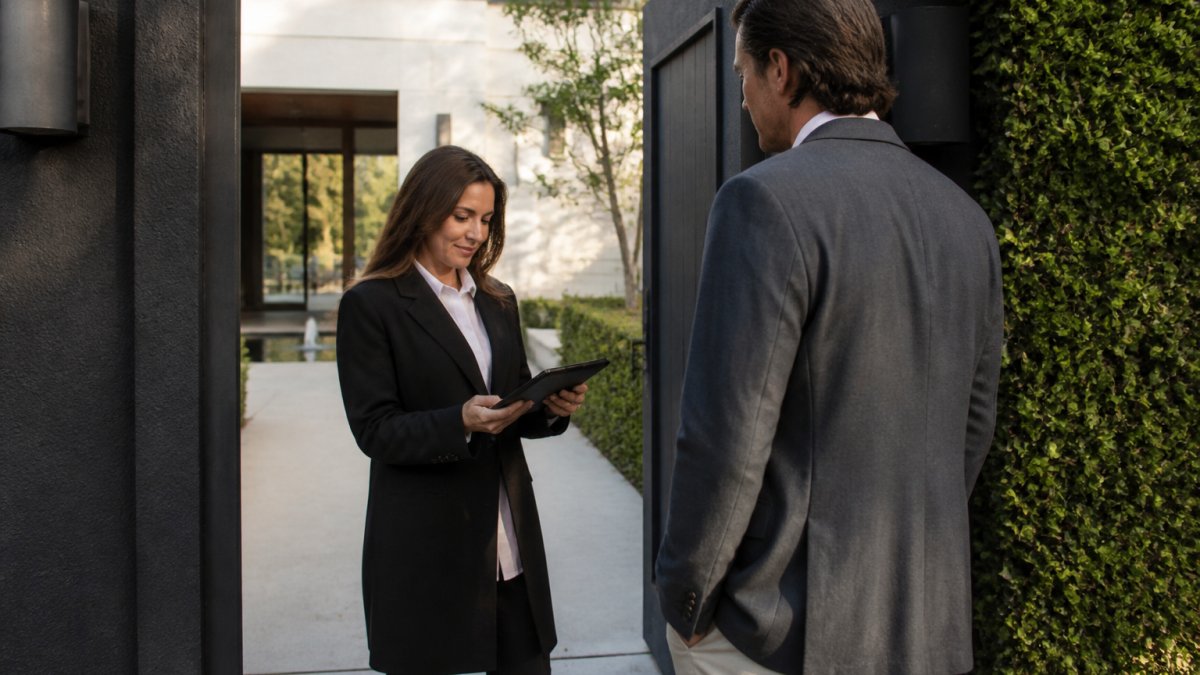
- Set appointment-only showings with a confirmed window for every visit.
- Require buyer identity verification through the agent before approval.
- Confirm proof of funds or lender pre-approval in advance.
- Limit each showing to the buyer, their agent, and no more than one guest.
- Keep a visitor log with name, time in, and time out.
- Walk the home with the buyer's agent rather than handing over keys.
- Remove or lock away valuables before the first appointment.
Agent guidance matters most in occupied homes, where staff, family members, and daily routines all need protection.
Watch out: skipping the visitor log feels harmless on a quiet afternoon. It removes your only record if something goes missing later. For the wider sequence from listing to close, see our guide on how to sell a luxury home quickly.
How to Vet Potential Luxury Home Buyers Before They Walk In
Buyer vetting is the process of confirming that a prospect can actually buy and has a legitimate reason to see the home. It is a useful filter against looky-loos, gossip seekers, and press.
Vetting happens in three stages:
- Identity check: confirm full name and government-issued ID through the buyer's agent.
- Financial check: request a lender pre-approval letter or proof of funds.
- Intent check: ask the buyer's agent what the buyer is looking for and why this home fits.
A serious buyer answers all three without friction. A curious neighbor usually cannot.
What most guides miss is that vetting protects the price too. Excessive restriction can shrink the pool of qualified buyers and hurt the final number, so screen for quality, not just for quiet. Keep every record you collect in one file, and never share buyer details with other prospects.
Secure Valuables, Personal Information, and Digital Access
Physical and digital privacy need the same treatment before a single showing. Start with the items that are easy to grab and hard to replace.
Before any visitor arrives:
- Lock jewelry, watches, cash, and small art in a safe or off-site vault.
- Remove family photos, diplomas, mail, and prescription bottles from view.
- Clear medicine cabinets and desk drawers.
- Shred or store bank statements and tax documents.
- Log out of computers and disable saved passwords.
- Hide Wi-Fi credentials and unplug smart-home displays.
- Set mail delivery to hold or a private mailbox.
Digital exposure is where most sellers slip. A single photo of a laptop screen or a home-office whiteboard can reveal a calendar, a client list, or a login. Walk the home with your phone camera and photograph every room the way a buyer would see it. If a detail should not be public, it should not be in frame.
Control Listing Media and Digital Exposure
Listing media reaches far more people than any open house ever will. Every photo, video, and floor plan is a permanent public record.
Professional photography and 3D tours can help sell homes up to 32% faster, according to Matterport's analysis of visual marketing. Speed matters, but so does control. Use both by deciding what the camera captures.
Our media rules:
- Shoot after personal items are removed.
- Avoid exterior shots that reveal house numbers, gates, or license plates.
- Turn off computer screens and hide documents in every frame.
- Approve every image before it goes live.
- Ask the agent to limit drone and aerial shots that map the property layout.
- Keep the full photo set out of public portals when privacy is the priority.
The Consumer Guide: Home Selling Tips for Privacy and Safety recommends limiting photography as one part of protecting seller privacy. Treat the camera as a visitor with a permanent memory.
Weigh Off-Market Luxury Home Sales Against Public Marketing
Off-market luxury home sales are transactions completed without a public listing, shared only with a vetted private network of agents and buyers. They trade exposure for control.
Reach. A public MLS listing syndicates to hundreds of consumer portals and reaches the widest pool of buyers. A private listing reaches your agent's network and a handful of cooperating brokerages.
Competition and price discovery. Public exposure creates competing offers, and competing offers create price discovery. Off-market sales often close at a discount because there is no bidding tension. The privacy trade-off is often reflected in the final number rather than the listing price.
Time on market. Off-market sales can take longer to source a qualified buyer, but they avoid the public "days on market" clock that can weaken negotiating position.
Market context. Sales of detached luxury homes rose 4.2% from 2024, according to Coldwell Banker Luxury's 2026 market report, and that growth came with privacy named as a primary driver. High-net-worth buyers increasingly use off-market deals to avoid public exposure of their assets, per Brevitas research on private transactions. Privacy has become the scarcest amenity in high-demand markets, per M Group Compass on privacy in high-end sales.
| Approach | Reach | Privacy | Price Discovery | Best For |
|---|---|---|---|---|
| Off-market / pocket listing | Limited, vetted network | Highest | Weakest, no bidding tension | Public figures, sensitive estates, sellers who value control over price |
| Private listing (agent network) | Moderate, cooperating brokers | High | Moderate, limited competition | Sellers wanting control with some reach |
| Full public listing | Widest, syndicated to portals | Lowest | Strongest, competing offers | Maximum exposure and competition |
A decision framework: Ask three questions before choosing. (1) Would public exposure of the sale create a safety, employment, or family risk? If yes, lean off-market. (2) Is the home unique enough that the right buyer is unlikely to be in any agent's network? If yes, lean public. (3) Can you accept a longer timeline in exchange for control? If not, public marketing with strict showing controls may be the better compromise.
If predictability matters as much as discretion, read our breakdown on how to build predictability in luxury real estate closings.
Use a Real Estate Non-Disclosure Agreement Template Correctly
A real estate non-disclosure agreement template is a contract that bars buyers, agents, and vendors from sharing details about the property, the seller, or the terms of the deal. It supports privacy; it does not replace it.
Use the template correctly by following these rules:
- Have a real estate attorney licensed in your state review it before use. NDA enforceability varies by state, and some states limit confidentiality around residential transactions.
- Present it before showings, not after an offer, and require signatures from every adult who enters, buyer, agent, guest, and vendor.
- Define what counts as confidential: price, seller identity, photos, floor plans, showing schedules, and negotiation terms.
- Set a clear end date and a remedy clause (liquidated damages or injunctive relief) so the obligation has teeth.
- Keep a signed copy in the same file as your visitor log and buyer-vetting records.
Where the NDA stops: A signed NDA does not override disclosure duties. Sellers still owe legally required property disclosures, and fair housing rules still apply to every buyer interaction. An NDA protects confidentiality around the sale.
MLS and listing-service limits: If the home is listed on an MLS, the listing agreement and MLS rules govern what can be kept confidential.
Enforcement reality: NDAs are often more of a deterrent than a courtroom tool.
Choose an Agent Who Makes Privacy Selling Luxury Homes Standard
Privacy selling luxury homes well comes down to the agent running the process. Ask candidates direct questions before you sign anything.
- How do you verify buyers before a showing?
- Who attends appointments, and who holds the keys?
- How do you control listing photos and drone footage?
- What is your visitor log process?
- How do you handle a press inquiry about my sale?
A strong agent answers each one with a written process, not a promise. Michael Eisenberg brings more than 25 years in the Greater Los Angeles market and a track record representing high-profile entertainment figures and industry titans. As KW Beverly Hills' Number 1 Top Gun, he brings deep local market knowledge to every listing. You can review the seller services or read 7 signs you've found a top luxury agent before you commit.
Plan Your Discreet Sale With a Confidential Strategy Session
A discreet sale is a project with a timeline, a buyer list, and a media plan, not a hope that nobody notices. The sellers who protect their privacy best are the ones who plan the exposure before the first photo is taken.
Start by writing down three things: who must never appear in the marketing, which rooms hold sensitive items, and how much reach you are willing to trade for control. Then build the showing protocol, the vetting rules, and the media limits around those answers. About 36% of listings nationally are taking price reductions, per Houston Association of Realtors data, so a quiet sale still has to be priced sharply to move.
Frequently Asked Questions
What is an off-market real estate listing and does it protect my privacy?
An off-market listing, sometimes called a pocket listing, is a property marketed privately to a vetted network of buyers and agents instead of the MLS or public portals. It keeps your address, photos, and sale timeline out of search results and press coverage. The trade-off is a smaller buyer pool, which can affect final price. Many luxury sellers pair an off-market launch with a controlled, later MLS release once the property has been quietly shopped.
Can I sell my home without putting it on Zillow or the MLS?
Yes. A private sale can close without any MLS entry, though it limits exposure to buyers your agent already knows or can source directly. Some sellers use a delayed MLS strategy: show the home privately for a set window, then list publicly if no acceptable offer arrives. Discuss the exposure plan with your agent and confirm how any syndication settings on listing platforms are configured before photos go live.
What does a real estate non-disclosure agreement template cover?
A real estate NDA template typically covers confidential sale terms, the seller's identity and motivation, interior photos, and any personal information shared during showings. It should define who is bound (buyer, agent, staff), the time limit, and remedies for breach. Have a real estate attorney review any template before use, since enforceability and required disclosures vary by state and cannot override fair housing or property disclosure obligations.
How can I prevent unauthorized photos of my home during showings?
Set the rule before the appointment: no photography or video without written permission. Have your agent collect phones or require a signed media policy at the door, and accompany every visitor room by room. Keep a visitor log with names, times, and agent details. If a breach occurs, document it immediately and have counsel send a takedown request. Controlled, official media reduces the incentive for unauthorized images.
A private sale fails when the process is improvised. Michael Eisenberg builds the protocol, vets every buyer, and controls the media from day one, backed by 25 years in the luxury market and a record of representing high-profile clients who cannot afford a leak. Get started with Michael Eisenberg and sell on your terms, with discretion built into every step. Contact us to schedule a confidential conversation.