 How-to
How to Stage a Luxury Home for Sale in Beverly Hills
Table of Contents
- Why Staging Matters More in the Luxury Market
- Luxury Home Staging Checklist: Room by Room
- Staging a Luxury Home for Photos
- Step-by-Step: Staging a Luxury Home from Start to Showing
- What Luxury Home Staging Costs
- Luxury Home Staging Before and After: What Changes
- Common Staging Mistakes to Avoid in High-End Homes
- Booking Your Luxury Staging Consultation with Michael Eisenberg
- Frequently Asked Questions
Last Updated: November 18, 2026
Staged homes sell faster. Industry reports suggest that staged homes can sell faster than unstaged ones, which is why many sellers treat staging as a core part of the sale rather than an afterthought. Michael Eisenberg, with more than 25 years of Greater Los Angeles real estate experience, has helped luxury sellers present their properties in a competitive, high-stakes market. This guide walks through how to stage a luxury home for sale step by step.
Keep in mind that a luxury buyer is not just looking at a house. They are imagining a life. Your job is to make every room easy to imagine living in.
DDH Home's Home Staging Statistics for 2026
Why Staging Matters More in the Luxury Market
Luxury buyers have high expectations and plenty of options. A cluttered or dated room can cost a seller more than a stray comment, because buyers quickly move on to the next listing.
Staging helps a home look its best in photos, at showings and in person. It also helps buyers see the space clearly, without their attention drifting to personal items or mismatched furniture.
Luxury Home Staging Checklist: Room by Room
A luxury staging plan works best when it is prioritized, not exhaustive. Buyers often form their strongest impressions at the entry, the primary suite and the main living space, so it helps to spend your budget in that order.
Work through the checklist below in sequence. Each line names what to do, why it matters to a high-end buyer, and roughly where the money goes.
- Entry and curb appeal (highest priority): Power-wash the driveway and walkway, repaint or restain the front door, replace the house numbers and door hardware, and add planters flanking the entry. A luxury buyer often reads the entry as a sign of how well the whole house has been maintained.
- Living and great rooms: Pull furniture off the walls and float seating on a rug to create a conversation zone, then anchor the room on its best feature, a fireplace, a view wall, or a statement light fixture. Remove at least one piece of furniture from every room; oversized rooms photograph as empty and undersized furniture photographs as cheap.
- Primary suite: Replace all bedding with crisp white or warm-neutral linens, add a folded throw at the foot of the bed, clear both nightstands to a lamp and one object, and remove any exercise equipment.
- Kitchen: Clear every counter except one styled vignette (a bowl of fruit, a cutting board, a single small appliance), empty the refrigerator of magnets and personal items, and remove dish towels and sponges before showings. High-end buyers open cabinets and drawers, edit the interiors too.
- Bathrooms: Replace towels with matched white sets, remove all toiletries and bath mats, add a single orchid or eucalyptus bundle, and regrout or recaulk any visible tile lines. A tired bathroom reads as a deferred-maintenance signal across the whole house.
- Outdoor spaces: Set the dining table as if for a dinner party, add lounge seating with weatherproof cushions, skim the pool and clear the deck of equipment, and make sure landscape lighting works at dusk. In high-value properties, the outdoor rooms often carry as much emotional weight as the interior.
- Secondary bedrooms and bonus rooms: Give each room a single clear purpose, guest room, office, gym, with one piece of furniture that signals it. Empty rooms confuse buyers; multipurpose rooms read as unstaged.
Watch out: staging every room to the same intensity spreads the budget thin and leaves the entry and primary suite underwhelming, the two rooms buyers remember.
A realistic staging budget by tier
Staging costs depend on factors such as the size of the home, the number of rooms furnished, whether furniture is rented or sourced, and how long the home stays on the market. Pricing depends on those factors, so a written quote is the most reliable way to compare options.
- Partial staging (occupied home, decluttering plus key rooms): design consultation, accessory and art rental, and light furniture rearrangement.
- Full staging (vacant home, whole-house furniture and art): design fee plus monthly rental on every furnished room, typically the largest line item.
- Outdoor and landscape staging: furniture, planters, and lighting, often quoted separately.
- Photography-day styling: fresh florals, linens, and a stylist on site, usually a small add-on but one of the highest-return line items.
Ask every stager for a written scope that separates design fees, rental fees, installation, and de-staging, and confirm who pays for damage or missing pieces. For current pricing in your area, contact Michael Eisenberg directly for a quote tailored to your home.
The checklist below sets out each room's priority, what to do, and why it matters to a high-end buyer.
| Room | Key action | Why it matters |
|---|---|---|
| Entry and curb appeal | Power-wash, repaint door, add planters | Signals how well the whole house is maintained |
| Living room | Float seating on a rug, anchor on best feature | Creates a conversation zone |
| Primary suite | Crisp linens, clear nightstands to one lamp and one object | Makes the bedroom feel restful |
| Kitchen | Keep one styled vignette, empty fridge of magnets | Buyers open cabinets and drawers |
| Bathrooms | Matched white towels, remove toiletries | Tired bathrooms signal deferred maintenance |
| Outdoor spaces | Set dining table, add weatherproof cushions | Outdoor rooms carry emotional weight |
| Secondary rooms | One clear purpose per room | Empty rooms confuse buyers |
Staging a Luxury Home for Photos
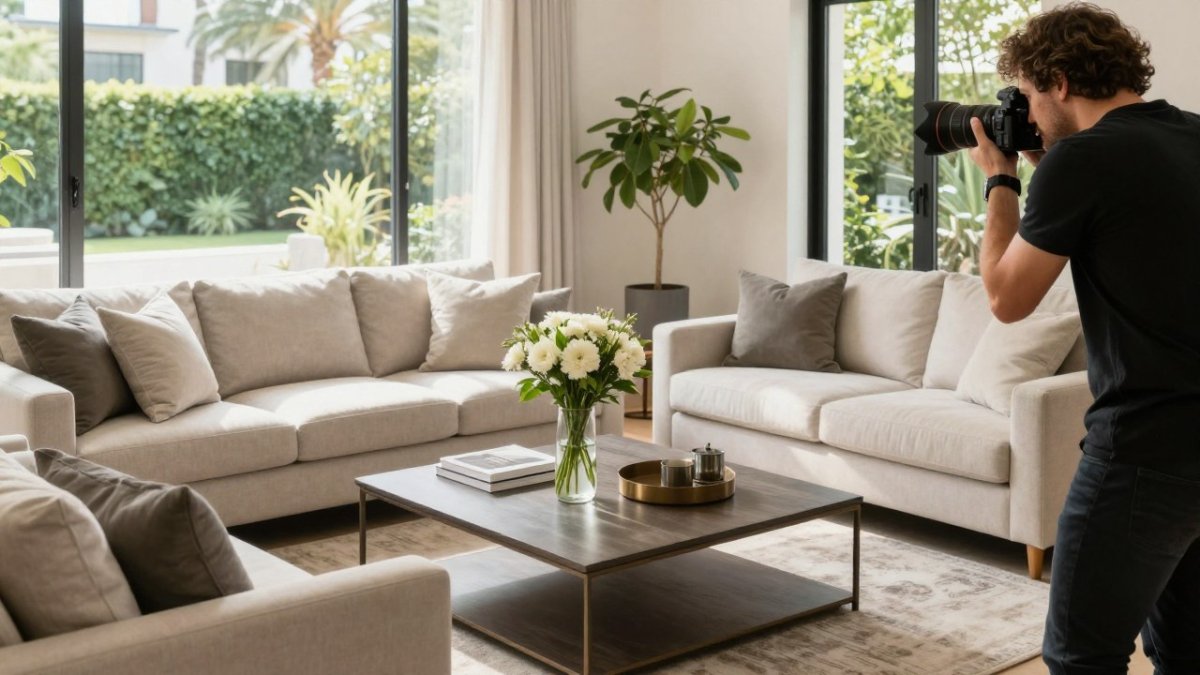
Listing photos are often the first impression buyers get, so they deserve extra care. Stage each room for the camera before the photographer arrives.
Open the blinds, turn on every light, and check the sightlines from the doorway. Small adjustments, like straightening a rug or angling a chair, make a visible difference in a photo.
Step-by-Step: Staging a Luxury Home from Start to Showing
Follow these steps in order. Each one builds on the last, and skipping ahead usually means redoing work.
Step 1: Declutter and Depersonalize
Start by removing anything that distracts from the architecture. Family photos, collections and personal mementos can stay in storage while the home is on the market.
Buyers need to picture themselves in the home, and personal items make that harder.
Step 2: Set the Scene with Furniture and Art
Next, arrange furniture to highlight the home's best features. Add art and accessories in a restrained palette so the rooms feel calm and cohesive.
Balance is key. A few well-chosen pieces look more expensive than a crowded room full of decor.
What Luxury Home Staging Costs
Staging is best evaluated as a line item rather than a lump sum, and luxury sellers should weigh it against expected net proceeds.
Because staging costs can include rental charges that accrue over time, the length of the listing can affect the total. Staging and pricing strategy are linked, since an overpriced home can extend the period during which staging costs accumulate.
How staging fits into net proceeds
Sellers should model staging alongside the other transaction costs, not in isolation. A typical luxury sale involves:
-
Real estate commissions, negotiated between seller and brokerage, paid at closing.
-
Escrow and title charges, split between buyer and seller according to the purchase contract and local custom.
-
Repairs and credits negotiated during the inspection and appraisal period.
-
Staging, photography, and marketing, usually paid upfront by the seller.
A simple way to frame the decision: estimate your likely sale price with and without staging, subtract every cost above from each scenario, and compare the net.
For current pricing, contact Michael Eisenberg directly for a quote tailored to your home.
Luxury Home Staging Before and After: What Changes
The difference staging makes is often most visible in side-by-side comparisons. A dim, cluttered living room can become bright and inviting once furniture is pulled into a conversational arrangement and clutter is removed.
Pay attention to how each room feels, not just how it looks. Good staging makes rooms easier to walk through and easier to picture living in.
Common Staging Mistakes to Avoid in High-End Homes
Even experienced sellers make a few predictable errors:
- Keeping too much personal decor
- Using furniture that is too small for the room
- Ignoring outdoor spaces, which luxury buyers often care about
- Leaving lighting dim or inconsistent
- Overcrowding rooms with accessories
Avoiding these mistakes keeps the focus on the home itself.
Booking Your Luxury Staging Consultation with Michael Eisenberg
Every luxury sale is different, and a tailored plan makes the biggest difference. Michael Eisenberg brings more than 25 years of Greater Los Angeles real estate experience.
Reach out to schedule a consultation and get a staging plan built around your home. Staging a luxury property well takes planning.
Frequently Asked Questions
How much does it cost to stage a luxury home?
Luxury home staging costs vary with the size of the property, the number of rooms staged, the length of the staging period and whether furniture is supplied or only consulting is provided. Pricing depends on those factors, so the most reliable figure comes from a written quote. For current pricing and a consultation tailored to your property, contact Michael Eisenberg directly. Ask any stager to itemize furniture rental, delivery, installation, art and accessories, and monthly maintenance so you can compare the total cost against the expected sale price and time on market.
Which rooms should you stage first in a luxury home?
Stage the spaces buyers see first and linger over longest. In most luxury listings that means the entry, the living room, the primary bedroom and the kitchen, with the outdoor entertaining area close behind for homes with large lots or pools. Begin there, then move to secondary bedrooms, offices and guest spaces.
How long does it take to stage a luxury home?
The timing of a full staging depends on the number of rooms, any custom pieces that must be sourced, and scheduling. Allow extra time for art installation, landscaping refreshes and final photography, and start before the listing goes live so the photographer has a finished space to shoot.
Should you remove personal items before showing a luxury home?
Yes. Remove family photos, personal collections, prescription items and anything that makes it harder for buyers to picture themselves in the home. Depersonalizing does not mean making the home feel empty. Keep the architecture and finishes visible, and replace personal pieces with neutral art, quality textiles and furnishings that show how each room can be used.