 How-to
How to Market an Ultra-Luxury Home to Qualified Buyers
Quick Summary
To market an ultra-luxury home, reach a small pool of qualified buyers through private outreach rather than broad public exposure. Price it against recent comparable sales, polish the property with professional staging and photography, and control who sees the listing details.
- Price using recent sales of similar homes and the active listings buyers are also considering.
- Invest in professional photography, cinematic video, and a virtual tour before any outreach begins.
- Favor private showings and exclusive open houses over broad public listing exposure.
- Ask every prospect for proof of funds before showing the home.
- Track qualified inquiries and private showings rather than raw website traffic.
Table of Contents
- What Makes Marketing an Ultra-Luxury Home Different
- How to Price a Luxury Home for the Top 1% of the Market
- Preparing the Property: Staging, Positioning and Ultra-Luxury Real Estate Photography
- Building the Visual Package: Video, Virtual Tours and a Dedicated Property Website
- Reaching Qualified and Private Buyers Without Public Exposure
- Setting Your Marketing Budget and Measuring Results
- Planning Your Luxury Home Selling Timeline, From Launch to Close
- Booking Your Strategy Call for Your Beverly Hills Listing
- Frequently Asked Questions
What Makes Marketing an Ultra-Luxury Home Different
Last Updated: November 13, 2026
Marketing an ultra-luxury home is not the same as listing a standard house. At Michael Eisenberg, we treat the top 1% of the market as its own category, with its own buyers, timelines and rules. The reported benchmark for this segment rose from $5.4 million in September 2025 to $5.6 million, according to Realtor.com Research, Luxury Housing Market Trends and Outlook 2026. That shift is a reminder that these buyers still move, but they move on their own terms.
Most sellers assume the fastest way to sell is to put the house everywhere. That approach often backfires at this price point.
Here is the core idea behind this guide: your marketing has to reach a small number of qualified people without turning the sale into public news. Every step below connects back to that goal.
Standard homes sell on volume. Ultra-luxury homes sell on precision.
How to Price a Luxury Home for the Top 1% of the Market
Pricing sets the tone for every other part of the campaign. Price too high and serious buyers never call. Price too low and you leave money on the table.
Luxury properties are also taking longer to sell right now. According to Quartz, reporting on Redfin data, luxury homes had a median of 96 days on market, up 11 days from the period used for comparison.
A practical pricing approach includes these steps:
- Compare recent sales of homes with similar size, views, and finishes
- Review the active listings your buyer is also considering
- Factor in how long comparable homes have sat on the market
- Set a price that reflects the property's distinctive features, not just square footage
Watch out: an overpriced listing can go stale fast, and a stale listing signals weakness to buyers who notice everything.
Preparing the Property: Staging, Positioning and Ultra-Luxury Real Estate Photography
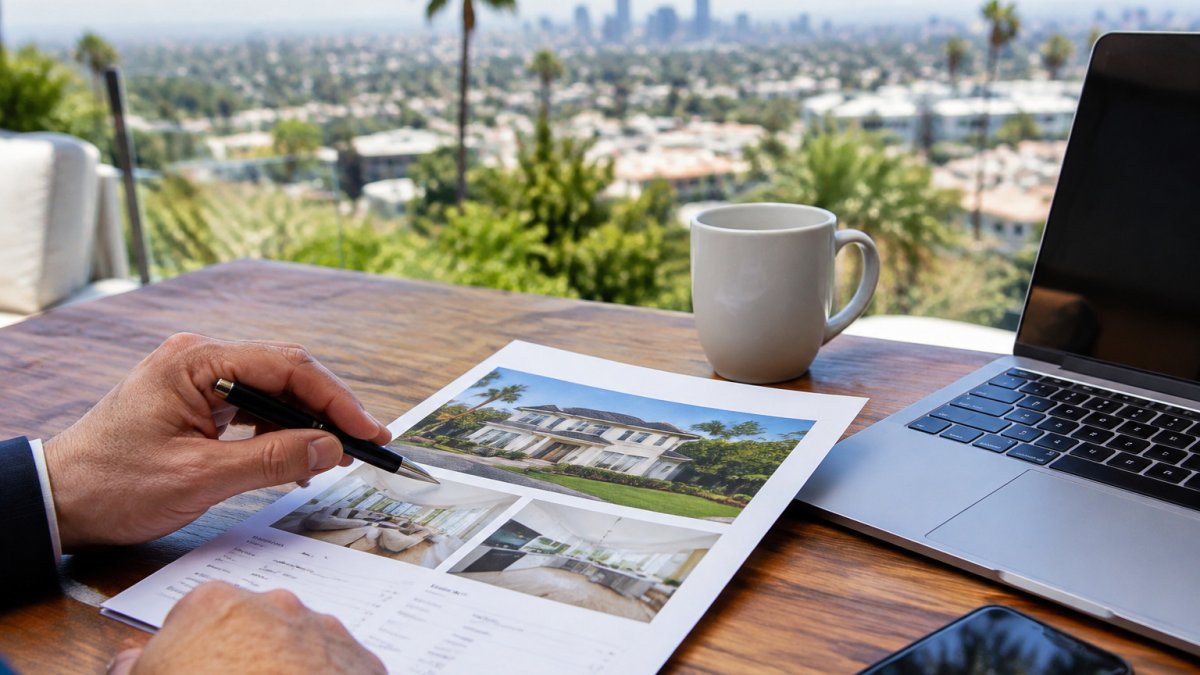
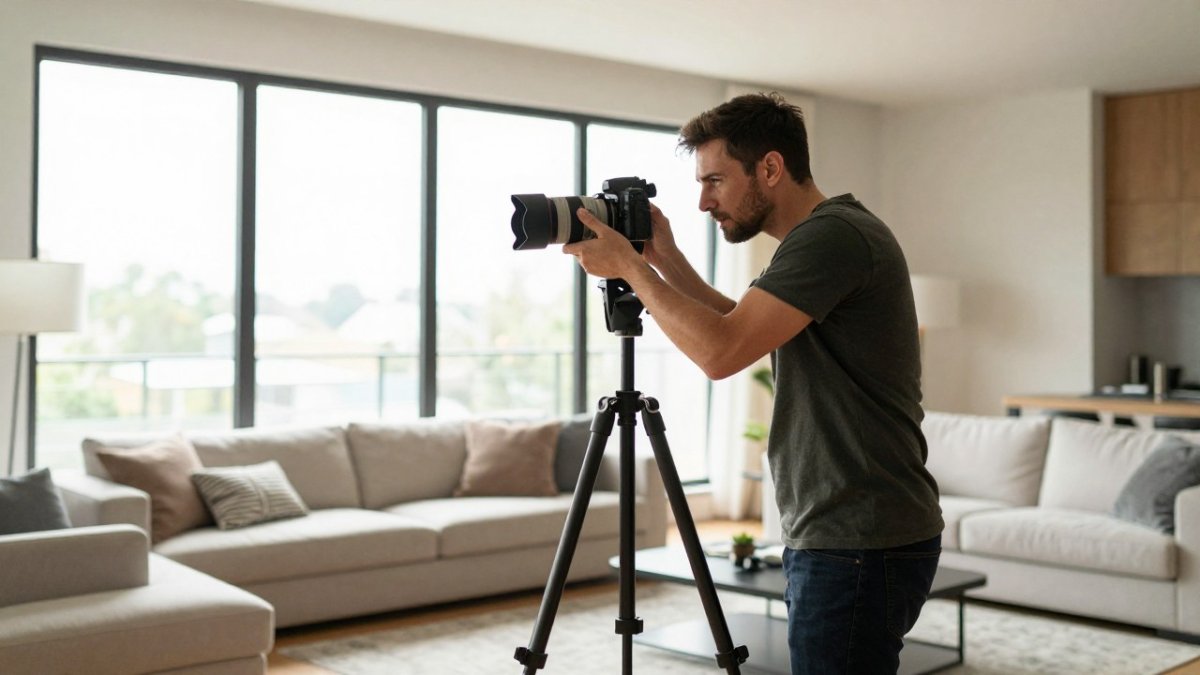
Before any buyer sees the home, the property has to look its best. Ultra-luxury real estate photography is a specialized task, and it deserves more attention than a quick phone snapshot.
Start with the basics:
- Remove personal items and clutter from every room
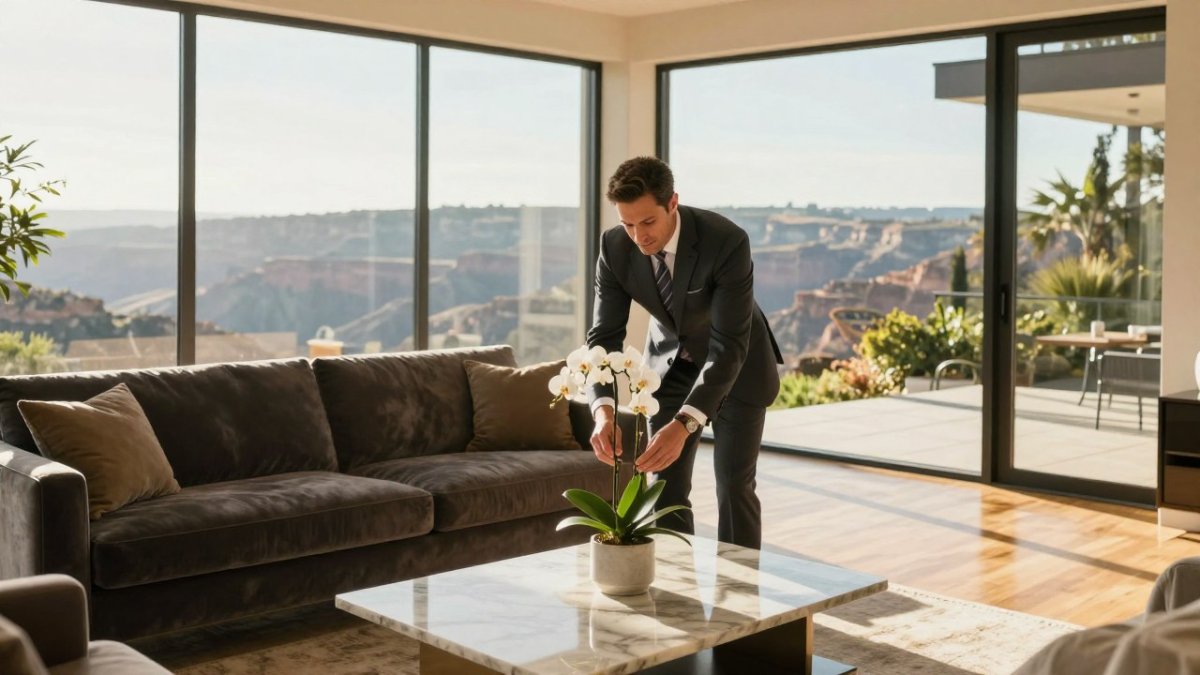
- Stage key rooms with restrained, high-quality furnishings
- Schedule photography on a clear day, ideally with natural light
- Capture architectural details, outdoor living areas, and views
Professional photographers use wide-angle lenses, careful lighting, and editing that keeps the home looking true to life. The goal is to show the house at its most compelling without making it look unreal.
Building the Visual Package: Video, Virtual Tours and a Dedicated Property Website
Buyers in this segment expect a rich visual experience before they ask for a private showing. Build a package that includes high-resolution photos, a cinematic video, and an immersive virtual tour.
A dedicated property website works well for ultra-luxury homes. It gives the property its own identity, separate from crowded portal listings. Include the story of the home, its architectural details, and a clear way for qualified buyers to request information.
Reaching Qualified and Private Buyers Without Public Exposure
The most valuable buyers in this market often prefer discretion. They may work in entertainment, business, or finance, and they rarely want their interest in a home broadcast to the public.
For that reason, many ultra-luxury campaigns use a mix of private outreach and selective exposure. Options include:
- Private showings by appointment only
- Exclusive open houses for pre-qualified guests
- Direct outreach to agent networks and known buyers
- Targeted placements in luxury lifestyle publications
Discretion also means controlling who sees the listing details. Ask every prospect for proof of funds before showing the home.
Our team at Michael Eisenberg works with a distinguished clientele, so we know how much privacy matters. If you want to see the agency's active luxury inventory, you can review Homes For Sale Beverly Hills for a sense of current listings in the area.
Setting Your Marketing Budget and Measuring Results
A strong campaign needs a realistic budget, and at this price point the budget conversation is really an allocation conversation. Marketing budgets for an ultra-luxury sale should be scoped to the property, and pricing depends on the scope of work. Collect written estimates from providers before committing to a budget.
A common allocation pattern for a campaign in this tier looks like this:
- Visual asset production (photography, cinematic video, virtual tour, drone, twilight set): the largest single line item for most listings, because every other channel reuses these assets.
- Staging and pre-market preparation: furniture rental, art, landscaping touch-ups, and minor repairs; often the highest-ROI spend because it changes what the camera captures.
- Dedicated property website and print collateral: design, copy, hosting, and a short run of high-quality brochures.
- Paid media and placement: targeted digital ads, luxury lifestyle print, and sponsored placement in affluent-buyer channels.
- Private events and outreach: catering, staffing, security, and travel for agent and buyer previews.
- Contingency: hold back a reserve for price adjustments, refreshed creative, or a second wave of paid media if the first 30 days underperform.
Watch out: the most common budgeting mistake is overspending on paid media before the visual assets and staging are finished, ads that drive traffic to weak photography waste the entire media line.
Measurement matters as much as allocation. Track these instead:
- Qualified inquiries: contacts that match the buyer profile and can document capacity to purchase.
- Private showings booked and completed: the real leading indicator of demand.
- Buyer-source attribution: ask every prospect how they found the property, and log it, so you know which channels actually produced showings rather than clicks.
- Proof-of-funds or pre-qualification rate: the share of inquiries that clear financial screening.
- Time to first offer and time to accepted offer: compare against the broader market's days-on-market trend to judge whether the campaign is working.
- Feedback themes from serious buyers: price, condition, and presentation objections, captured consistently so patterns emerge.
Review performance on a fixed cadence and make one change at a time, so you can tell what moved the numbers.
Planning Your Luxury Home Selling Timeline, From Launch to Close
A clear timeline keeps the campaign on track, but at this price point the sequence matters more than the stages. A phased launch, with preparation and private previews first, is one way to sequence the campaign. A realistic sequence for an ultra-luxury listing looks like this:
Weeks 1-2: Strategy and pricing. Walk the property, review comparable sales and active competition, agree on a pricing strategy and a reserve, and set the campaign calendar. Decide up front whether the launch will be public or private-only. For the detailed steps, see how to sell a luxury home quickly.
Weeks 2-5: Preparation. Staging, repairs, landscaping, and decluttering. This phase routinely runs longer than sellers expect; build in buffer rather than compressing it.
Weeks 4-6: Asset production. Photography, cinematic video, virtual tour, drone, and floor plans, followed by website and brochure design. Schedule shoot days around weather and staging completion, and approve final creative before any outreach begins.
Weeks 6-7: Private preview window. Share the property with your agent network and a short list of known qualified buyers under confidentiality terms. This is where proof-of-funds screening and showing logistics get tested before any public exposure.
Week 7 onward: Controlled public launch. Dedicated website goes live, paid media and lifestyle placements turn on, and the first exclusive open house or private showing series is scheduled. Keep public listing details limited to what is necessary, and hold back security-sensitive information.
Weeks 8-12: Active marketing and refinement. Targeted outreach continues, showing feedback is reviewed every two weeks, and pricing or creative is adjusted based on qualified-showing volume rather than traffic.
Negotiation and due diligence. Build in extra time here, as high-value deals often involve detailed inspection, appraisal, and financing review.
Closing. Escrow, documentation, and final transfer, coordinated with the title and escrow team from the start so nothing stalls at the end.
The phases below summarise the campaign timeline, from strategy through to closing.
| Phase | Timing | Key activity |
|---|---|---|
| Strategy and pricing | Weeks 1-2 | Review comparables, agree pricing and launch type |
| Preparation | Weeks 2-5 | Staging, repairs, landscaping, decluttering |
| Asset production | Weeks 4-6 | Photography, video, virtual tour, website |
| Private preview | Weeks 6-7 | Share with agents and qualified buyers |
| Controlled public launch | Week 7 onward | Website live, paid media, open house |
| Active marketing | Weeks 8-12 | Outreach, feedback reviewed every two weeks |
| Negotiation and diligence | After offers | Inspection, appraisal, financing review |
| Closing | Final stage | Escrow, documentation, title transfer |
Booking Your Strategy Call for Your Beverly Hills Listing
If you are planning to sell a luxury property in Beverly Hills, the right strategy makes a measurable difference. Michael Eisenberg, KW Beverly Hills' Number 1 Top Gun with over 25 years of experience in Greater Los Angeles, can help you build a plan around your property and your goals. Book your strategy call to discuss pricing, marketing, and timing for your home.
Frequently Asked Questions
How long does it typically take to sell an ultra-luxury home?
Timelines vary widely by property, price point and market conditions. Ultra-luxury buyers are a smaller pool, so plan for a longer marketing window than with mainstream homes, and build your launch sequence around a realistic range rather than a single fixed date.
How do I reach qualified buyers for a luxury property?
Qualified ultra-luxury buyers are rarely found through broad public advertising alone. Campaigns for this segment often combine professional visuals, private outreach and discreet showings. Your agent should be able to explain which channels they use and why, and how they screen inquiries for financial readiness.
How should I price an ultra-luxury home?
Pricing a luxury home relies on comparable sales, current market analysis and the property's distinctive features, rather than a simple price-per-square-foot formula. Pricing must reflect current market conditions. Ask your agent for a written comparable analysis before you agree on a list price.