 blog
5 Best Neighborhoods to Buy a Luxury Home in LA
Last Updated: November 7, 2026
Quick Summary
The best neighborhoods for a luxury home in Los Angeles depend on your priorities: Beverly Hills offers the global benchmark and walkability, Bel Air offers maximum privacy on large hillside lots, and Brentwood and Pacific Palisades offer coastal access with more space. Hancock Park and Los Feliz suit buyers who value historic architecture and walkable streets.
- Beverly Hills is the reference point for Los Angeles luxury residential real estate and offers walkability to dining and shopping.
- Bel Air is one of the strongest options for buyers who prioritize seclusion and land, with steep, narrow access roads to check.
- Brentwood and Pacific Palisades suit buyers wanting coastal access and larger yards, with ocean-view premiums and insurance to factor in.
- Hancock Park and Los Feliz offer period architecture from the 1910s to 1930s, but may carry preservation rules and unpermitted work.
- Compare total annual ownership cost, including property tax, insurance, HOA dues, and maintenance, rather than only the purchase price.
Table of Contents
- How We Defined Luxury in Los Angeles
- Beverly Hills: The Benchmark for the Los Angeles Luxury Home Market
- Bel Air: Hillside Estates and Maximum Privacy
- Brentwood and Pacific Palisades: Coastal Access With Space
- Hancock Park and Los Feliz: Historic Architecture and Walkable Streets
- Comparing Luxury Home Prices and Total Cost of Ownership
- Working With a Luxury Agent to Pick Your Neighborhood
- Scheduling Your Neighborhood Tour and Next Steps
- Frequently Asked Questions
Los Angeles has no single definition of luxury. Some buyers want a gated estate with a city view; others want a beach house with room to breathe; others want a historic home within walking distance of a good café. For high-net-worth buyers, the right neighborhood depends on privacy needs, commute, lifestyle, and how the property will be used. This guide walks through five of the most sought-after luxury neighborhoods in Los Angeles and explains what each one offers.
How We Defined Luxury in Los Angeles
Luxury is not just a price tag. In this guide, we define a luxury neighborhood by a combination of factors: the quality and scale of the housing stock, the level of privacy and security, access to outdoor space and views, and the lifestyle amenities nearby.
Most buyers should start by ranking three questions: How much privacy do you need? How much land do you want? And how often will you be on the property versus traveling? Those answers narrow the field quickly.
Beverly Hills: The Benchmark for the Los Angeles Luxury Home Market
Beverly Hills remains the reference point for luxury residential real estate in Los Angeles. Browse current homes for sale in Beverly Hills to see what is available.
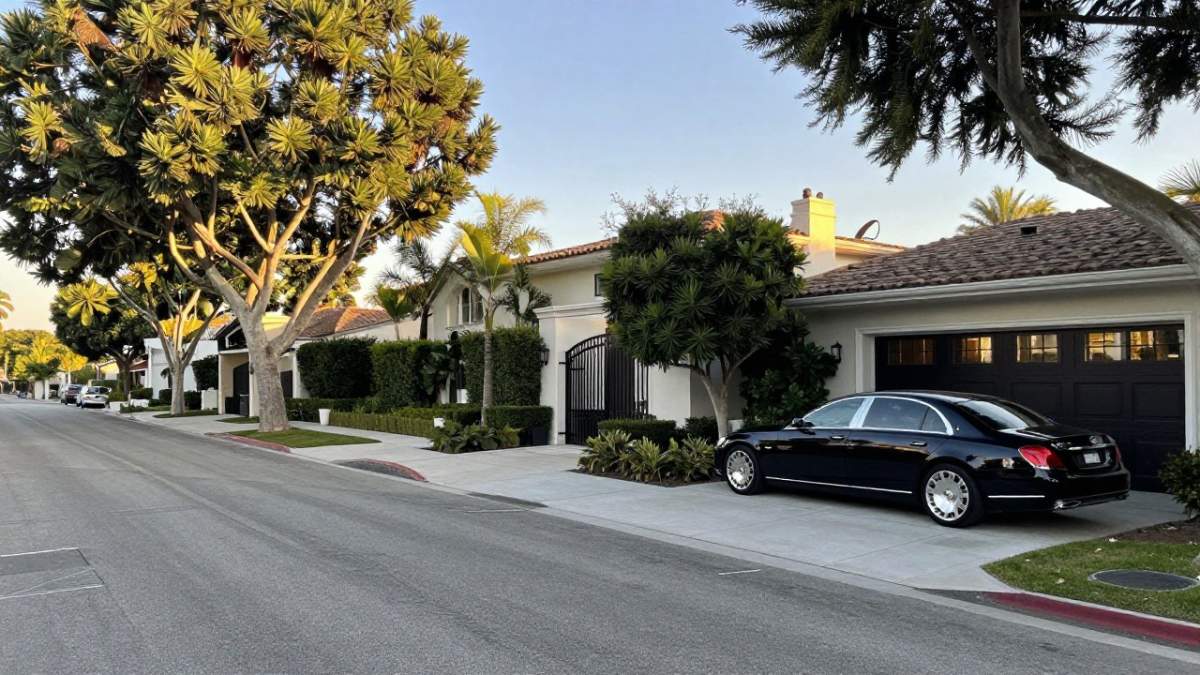
The trade-off is density. Lots are smaller than in Bel Air or the hillside enclaves, and the most prestigious properties command premium pricing. For buyers who want prestige, walkability to dining and shopping, and proximity to the studios and business districts, Beverly Hills is hard to beat.
Privacy, Gated Estates and Security
Gated estates are common in Beverly Hills, and many of the most sought-after homes sit behind private drives and layered security. For buyers who need discretion, the question is less about whether a home is gated and more about how the property is screened, how access is managed, and how quickly a seller's team responds to inquiries.
Bel Air: Hillside Estates and Maximum Privacy
Bel Air is known for large lots, winding hillside roads, and homes set back from the street. Browse the available Bel Air properties to see how these estates compare. It is one of the strongest options for buyers who prioritize seclusion and land.
The hillside setting also brings practical considerations. Access roads can be steep and narrow, and buyers should look closely at grading, drainage, and fire-safety conditions before committing.
Brentwood and Pacific Palisades: Coastal Access With Space
Brentwood and Pacific Palisades appeal to buyers who want a more relaxed, residential feel with access to the coast. Homes here often offer larger yards and a family-oriented atmosphere, while staying within reach of the Westside's dining and business corridors.
Coastal proximity is a major draw, but it also affects pricing and insurance. Buyers should factor in ocean-view premiums, maintenance for exposed properties, and the specific risks tied to hillside and canyon locations.
Hancock Park and Los Feliz: Historic Architecture and Walkable Streets
Hancock Park and Los Feliz offer something the newer luxury enclaves often cannot: established architecture and tree-lined streets that feel settled. Many homes here date to the 1910s through the 1930s, with period details, mature landscaping, and a strong sense of place. For buyers who want a neighborhood rather than a destination estate, these two areas reward a different kind of diligence than a hillside compound does.
What makes these neighborhoods different
Hancock Park is characterized by large lots, wide streets, and a concentration of traditional and period-revival homes, with a location that keeps buyers close to the Mid-Wilshire and Beverly Hills business corridors. Los Feliz mixes architectural variety, Spanish Colonial, Mediterranean, Mid-Century, and more, with a walkable village feel near local restaurants, shops, and the Griffith Park trails. Both areas appeal to buyers who value character and street life over gated seclusion.
Property-level due diligence for older homes
Historic character is a feature, but it also creates constraints that a newer home does not have. Before committing, work through these items:
- Historic-preservation rules: Some properties carry historic designations or sit within areas subject to preservation review. Exterior alterations, additions, and even window replacements can require approval. Ask the city's planning department whether the specific parcel carries a designation or overlay, and request any prior approvals on file.
- Permits and unpermitted work: Older homes frequently have additions, converted garages, or finished basements that were never permitted. Ask for the permit history and compare it to the actual structure. Unpermitted work can complicate financing, insurance, and resale.
- Systems and structure: Original plumbing, electrical, and heating systems may be at or past their service life. A thorough inspection should cover the foundation, roof, sewer line, and chimney, not just the cosmetic condition.
Watch out: A beautifully restored period home can still carry deferred maintenance in the systems behind the walls, so budget for a specialist inspection rather than relying on a general one.
Walkability and lifestyle trade-offs
Walkability is a genuine advantage here, but it varies block by block. Test the specific address at the times you would actually use it, morning coffee, evening dinner, weekend errands, rather than assuming the whole neighborhood walks the same way. Parking patterns, street noise, and proximity to commercial corridors all shift within a few blocks.
Who these neighborhoods fit
These areas suit buyers who prioritize architectural character, walkable streets, and a settled neighborhood feel over maximum privacy and acreage. Buyers who need gated seclusion, very large lots, or immediate proximity to the coast will usually find a better fit in Bel Air, Beverly Hills, or the coastal neighborhoods. Matching the neighborhood to how you actually live is the decision that matters most, and for character-driven buyers these two areas are hard to match.
Comparing Luxury Home Prices and Total Cost of Ownership
Purchase price is the headline number, but it is rarely the number that determines whether a luxury purchase feels comfortable five years in. Two homes listed at the same price can carry materially different annual costs depending on lot slope, age, insurance exposure, and whether the property sits inside a homeowners association or a gated community with its own assessments.
The cost stack to compare side by side
Build a simple comparison sheet for each property and fill it in before you tour. The categories that matter most:
- Property tax: In California, the base rate under Proposition 13 is 1% of assessed value plus voter-approved local bonds and assessments, and the assessed value is generally tied to the purchase price at the time of sale. A higher purchase price resets the base, so two otherwise similar homes in different neighborhoods can carry meaningfully different tax bills. Confirm the exact rate and any direct assessments with the county assessor's office for the specific parcel.
- Insurance: This is the line item that has changed most in recent years. Wildfire exposure in hillside and canyon areas, and coastal storm and flood exposure near the beach, can drive premiums well above what buyers expect from inland flat-lot homes. Ask for current quotes before you remove contingencies, not after.
- HOA and community assessments: Gated communities and planned developments often carry monthly or annual dues that cover private roads, security, landscaping, and shared amenities. Read the budget and reserve study, not just the monthly figure.
Why neighborhood-level data beats reputation
General neighborhood reputation is a poor substitute for current comparable sales.
Also ask for days on market and the ratio of final sale price to original list price.
Watch out: A low list price on a steep hillside property can hide higher insurance, drainage, and access costs that only surface during due diligence, so compare total annual cost rather than sticker price.
A realistic total-cost comparison
For each property, total the annual property tax, insurance quotes, HOA dues, and an allowance for maintenance and security.
Because tax rates, insurance availability, and local assessments change, verify every figure for the specific parcel with the county assessor, your insurance broker, and the community association before you rely on it.
The table below lists the main recurring costs to compare across properties before making an offer.
| Cost item | What drives it | What to check |
|---|---|---|
| Property tax | Base rate of 1% of assessed value plus local bonds | Confirm rate with county assessor |
| Insurance | Wildfire, coastal storm and flood exposure | Get current quotes before removing contingencies |
| HOA dues | Private roads, security, landscaping, amenities | Read budget and reserve study |
| Maintenance | Lot size, pools, landscaping, older systems | Estimate ongoing annual upkeep |
| Security | Private security, access control, screening | Treat as a recurring budget line |
Working With a Luxury Agent to Pick Your Neighborhood
A good agent does more than show homes. They help you rank your priorities and anticipate issues such as privacy concerns and the practical details of closing.
Experience also matters when a transaction is complex. Read how to choose discreet luxury real estate representation to learn what to look for in an advisor. Buyers who need confidentiality, flexible scheduling, or value-add strategy should look for an agent who has handled similar situations and can explain how they approach them.
Scheduling Your Neighborhood Tour and Next Steps
Start by narrowing your list to two or three neighborhoods that match your priorities. Visit our buyers page to begin the buying process. Then schedule tours in each area so you can compare the setting, the streets, and the day-to-day feel of living there. Learn how luxury property showings are managed before you book. Pay attention to traffic at the times you would actually commute.
When you are ready to move forward, our team at Michael Eisenberg can help you map the neighborhoods against your goals and set up a process that fits your schedule. Michael Eisenberg has over 25 years of experience in the Greater Los Angeles real estate market and is recognized as KW Beverly Hills' Number 1 Top Gun.
Frequently Asked Questions
What are the best luxury neighborhoods in Los Angeles?
The neighborhoods most often cited for luxury homes are Beverly Hills, Bel Air, Brentwood, Pacific Palisades and Hancock Park. Each offers a different mix of privacy, architecture, coastal access and lifestyle. Beverly Hills and Bel Air are known for gated estates and seclusion, while Brentwood and Pacific Palisades pair large lots with proximity to the ocean. Hancock Park suits buyers who value historic architecture and tree-lined streets. Start by ranking which of these qualities matters most to your household.
Which Los Angeles neighborhoods offer the most privacy for luxury-home buyers?
Bel Air and the hillside pockets of Beverly Hills generally offer the most privacy, with long driveways, gated entries and lots set back from the street. Privacy also depends on the specific property, so a home on a busy boulevard can feel less secluded than one at the end of a cul-de-sac. When privacy is a priority, ask about gate access, sight lines from neighboring homes and any shared easements before making an offer.
What should buyers compare when choosing a luxury neighborhood in Los Angeles?
Compare privacy, commute times, access to dining and entertainment, school options, views and outdoor space, and how each neighborhood holds value over time. It also helps to compare total cost of ownership, including property taxes, insurance, maintenance on hillside or older homes, and security costs. Pricing depends on property size, condition and timing, so request current comparable sales for each neighborhood on your shortlist.
How do luxury home prices vary across Los Angeles neighborhoods?
Prices differ widely by neighborhood, lot size, views and architectural significance, so no single price range fits the whole market. Most buyers find that homes with ocean or city views and larger lots command premiums compared with similar-sized properties without them.