 blog
7 Costs to Weigh Before Buying a Los Angeles Mansion
Last Updated: November 21, 2026
Quick Summary
Buying a Los Angeles mansion is worth it mainly as a lifestyle asset, not a short-term investment, because heavy transaction costs can swallow years of appreciation. If you plan to hold fewer than five years, renting usually wins on cost; long-term owners who use the home can justify ownership even when the investment math is thin.
- Measure ULA transfer taxes run 4% on deals above $5.4 million and 5.5% at $10.9 million or more.
- Confirm the post-sale reassessed property tax bill with the county assessor instead of using the seller's current bill.
- Staffing is recurring payroll, not a one-time expense, and buyers can easily overlook this line.
- The mansion tax deterred some owners from selling and chilled the market, reducing top-tier inventory.
- Compare buying and renting at three, five, seven, and ten years using your actual numbers before making an offer.
Table of Contents
- The Real Math Behind a Los Angeles Mansion Purchase
- The Full Cost of Owning a Mansion in Los Angeles
- How the Los Angeles Mansion Tax Reshapes the Deal
- Buying Versus Renting a Luxury Home in Los Angeles
- Los Angeles Luxury Real Estate Market Trends 2026
- Neighborhood Trade-Offs: Westside, Beverly Hills, and the Valley
- Mansion-Specific Risks and Due Diligence
- What to Bring to Your First Luxury Property Tour
- Frequently Asked Questions
The Real Math Behind a Los Angeles Mansion Purchase
Is buying a mansion in Los Angeles worth it? It depends on whether you treat the purchase as a home or an investment, because the two calculations point in different directions.
A mansion in Los Angeles is a lifestyle asset first and a financial asset second. Transaction costs alone can swallow years of appreciation.
The city's transfer tax structure makes that concrete. Los Angeles City Finance's Measure ULA FAQ confirms that transactions above $5.4 million but below $10.9 million carry a 4% transfer tax, and deals at $10.9 million or more carry 5.5%. On a $12 million sale, that's $660,000 paid at closing before commissions or escrow fees. For guidance on negotiating high-stakes luxury deals, see our dedicated article.
guidance on negotiating high-stakes luxury deals
The Full Cost of Owning a Mansion in Los Angeles
Purchase price is the smallest part of the conversation most buyers remember. Ownership costs compound annually through taxes, insurance, staffing, and maintenance, and they don't pause when the market softens. What most buyers need is a line-item annual ownership model with realistic low, typical, and high ranges.
The ranges below are planning bands, not quotes; your actual numbers depend on square footage, lot size, age, construction, location, and service level. Use them to pressure-test a budget before you tour, then replace each band with a real quote during due diligence.
Property Taxes
Property taxes are a major fixed line for most owners. Under California's Proposition 13 the base rate is 1% of assessed value, plus any voter-approved bonds and special assessments. A sale can trigger reassessment, so a buyer should confirm the post-sale tax bill with the county assessor rather than relying on the seller's current bill.
Watch out: buyers who model taxes off the seller's current bill rather than the post-sale reassessed value routinely underbudget by tens of thousands of dollars per year.
Homeowners Insurance
Insurance on a high-value structure generally scales with replacement cost rather than market value, and features such as custom finishes, pools, guest houses, security systems, and hillside exposure can affect premiums. Discuss coverage options with a licensed insurance professional for current quotes.
Staffing and Payroll
Staffing is recurring payroll, not a one-time expense, and it is a line buyers can easily overlook. Costs depend on the headcount and service level you choose, and whether you employ staff directly or contract through an agency.
Maintenance, Repairs, and Capital Reserves
Roofs, HVAC systems, pool equipment, landscaping, security infrastructure, and exterior finishes all age, and luxury finishes often cost more to repair. Plan for ongoing maintenance along with a separate capital reserve for major replacements.
Utilities and Grounds
Utilities on a large estate, heating and cooling across many zones, pool and spa equipment, irrigation, exterior lighting, and security, can vary widely depending on size, climate zone, and conditioned square footage.
Putting the Model Together
All-in annual ownership costs for a large estate depend on staffing, grounds, insurance exposure, and property specifics. Build a reserve sized to your own line-item ownership budget before you bid.
Watch out: stretching to the top of your budget leaves no room for the reassessment shock, the insurance quote that arrives after inspection, or the first capital repair, and those three arrive together more often than buyers expect.
How the Los Angeles Mansion Tax Reshapes the Deal
The Los Angeles mansion tax changes the arithmetic on both ends of the transaction. Measure ULA adds a transfer tax at the rates above, so the tax bill depends entirely on where your purchase price lands relative to the $5.4 million and $10.9 million thresholds.
That creates a real strategic question. A deal priced just above a threshold can cost dramatically more in tax than one priced just below it. Sellers factor this in when they set asking prices, and buyers should factor it in when they structure offers.
The policy also affects supply. Harvard Business School Working Knowledge's analysis of mansion taxes found that Los Angeles's mansion tax deterred some owners from selling and chilled the market. Fewer sellers means less inventory at the top, which pushes competition toward the listings that do come up.
Buying Versus Renting a Luxury Home in Los Angeles
Buying versus renting a luxury home in Los Angeles comes down to time horizon and what you're optimizing for. Renting preserves liquidity and flexibility; buying builds equity but locks capital into an asset with heavy transaction costs on both entry and exit. Quantify both sides over multiple holding periods instead of arguing in the abstract.
The Buy-Side Cash Flows
Start with the purchase: price, closing costs (title, escrow, lender fees, and inspections), and any transfer taxes. Add the annual ownership costs from the model above at the post-sale reassessed value. If you finance, add mortgage interest at current rates. Finally, add selling costs at exit, plus any transfer tax on the sale.
The Rent-Side Cash Flows
On the rent side, add lease payments over the same holding period, adjusted for reasonable annual increases, plus the investment return you would earn on the capital you did not deploy. That opportunity cost is the piece buyers most often skip.
A Worked Comparison
Over shorter holding periods, renting is often cheaper on a pure cash basis unless the property appreciates meaningfully, because transaction costs and ownership expenses consume early appreciation. Over longer periods, the buy side can close the gap, especially with fixed-rate financing and an owner who uses the home.
What Changes the Answer
Holding period is the biggest lever. Below roughly five years, transaction costs and ownership expenses usually dominate, and renting wins on cost. Beyond seven to ten years, amortization, appreciation, and the option to refinance can shift the math toward ownership.
Watch out: comparing a mansion's purchase price to a smaller home's rent, or ignoring the opportunity cost of the down payment, produces a comparison that flatters buying and hides the real break-even point.
If you plan to hold fewer than five years, renting usually wins on cost; if you're buying for the long term and using the home, ownership can make sense even when the pure investment math is thin. Run the comparison at three, five, seven, and ten years with your actual numbers before you make an offer.
Los Angeles Luxury Real Estate Market Trends 2026
Market conditions in 2026 point to a steadier picture than the frantic years that preceded it. A 2026 Los Angeles housing market forecast from Sammamish Mortgage reports more listings coming to market while affordability stays tight, with a median sale price of roughly $1.06 million across the broader market.
The luxury tier behaves differently from that median. Grey Square's 2026 luxury home cost analysis, citing Realtor.com data, reports that international demand for luxury homes rose 18.2% through the end of 2025 before easing in early 2026. Demand at the very top remains resilient, with the $10 million-plus segment holding up better than the middle of the market.
For a deeper read on where prices and inventory are heading, see our full analysis of Los Angeles luxury real estate market trends.
| Factor | Market Trend Signal | What It Means for Buyers |
|---|---|---|
| Inventory | More listings than prior years | Greater choice, more room to negotiate |
| International demand | Up 18.2% through 2025, easing early 2026 | Less bidding pressure than peak |
| $10M+ segment | Described as resilient | Competition persists at the top |
| Affordability | Still tight | Financing costs remain a factor |
Neighborhood Trade-Offs: Westside, Beverly Hills, and the Valley
Neighborhood choice drives both lifestyle and resale value, and the trade-offs are sharper than most buyers expect. The Westside offers proximity to the coast and entertainment industry corridors. Beverly Hills delivers prestige and walkable commercial districts.
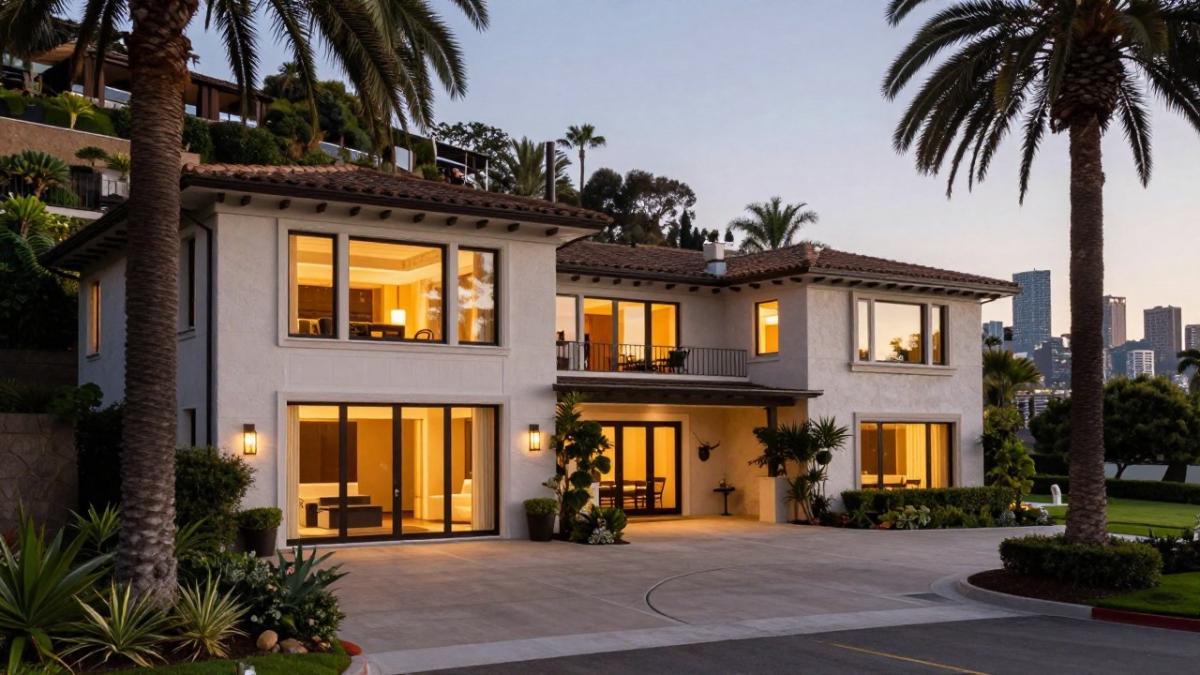
Each area holds value for different reasons. Beach communities command premiums for views and access. Downtown condos serve a different buyer entirely, often one prioritizing lock-and-leave convenience over square footage.
If Beverly Hills is on your shortlist, browsing actual Homes For Sale Beverly Hills listings is the fastest way to calibrate what your budget buys in each pocket of the neighborhood.
Mansion-Specific Risks and Due Diligence
Due diligence on a mansion goes well beyond a standard inspection. Large estates carry risks that don't show up on a typical walkthrough, and the cost of missing them scales with the property.
Start with structure and systems. Custom builds sometimes carry permits that were never finalized, and older estates may have systems near the end of their service life. Title and easement issues matter more on large parcels, where boundaries, shared driveways, and view corridors can complicate ownership.
In a high-stakes purchase, verify what the seller is legally required to disclose and what requires independent investigation. Consider commissioning your own inspection rather than relying solely on the seller's.
What to Bring to Your First Luxury Property Tour
A first luxury property tour is a listening exercise, not a decision point. Bring a clear budget ceiling, a list of non-negotiables, and questions about the property's ownership history and systems.
Prepare a short checklist before you walk in:
- Your financing status or proof of funds
- A written list of must-haves versus nice-to-haves
- Questions about recent renovations and permits
- Notes on noise, privacy, and sight lines
- A second visit scheduled for daylight hours
When you're ready to move from browsing to a structured search, our buyer services page is where the process starts with an agent who knows these properties.
The costs are real, the tax structure is unforgiving, and the market rewards buyers who plan before they tour. Michael Eisenberg brings more than 25 years of Greater Los Angeles real estate experience to that planning, with deep local market knowledge. As KW Beverly Hills' Number 1 Top Gun, Michael Eisenberg provides expert guidance in buying and selling properties. Get started with Michael Eisenberg and walk into your first tour with the numbers already on your side.
Frequently Asked Questions
How much is the mansion tax in Los Angeles?
Los Angeles charges a Measure ULA transfer tax on high-value sales. Measure ULA applies tiered rates at higher price points, so the charge depends on where the price falls. Review the current official Los Angeles City Finance guidance for the rates in force at your transaction. Budget for it at purchase and again at resale.
What does it cost to own a mansion in Los Angeles each year?
Ongoing costs stack well beyond the mortgage. Property taxes, homeowners insurance on high-value structures, pool and landscape crews, security, and sometimes full-time staff all run every month whether you are in residence or not. Ask for a line-item annual ownership budget before you make an offer rather than estimating after closing.
Is it smarter to buy or rent a luxury home in Los Angeles?
Buying versus renting a luxury home in Los Angeles depends on how long you plan to hold. The mansion tax plus closing costs and selling friction means a short hold often does not pencil out financially. If you expect to stay many years and want control over the property, buying can make sense. If your timeline is uncertain or you split time between coasts, renting preserves flexibility and avoids the transaction tax entirely.
Do Los Angeles mansions hold their value?
The ultra-luxury segment above $10 million has been described as resilient in 2026 market commentary, and international demand for luxury homes rose through the end of 2025 before easing in early 2026. That said, the mansion tax can discourage sellers and thin out transactions, so resale value depends heavily on location, condition, and how you price against current inventory.